
Have You Freeze-Dried These 10 Classic Candies Yet?
Have You Freeze-Dried These 10 Classic Candies Yet?
Freeze-dried candy helped turn freeze-drying into something people could not stop watching, tasting, and talking about. Familiar candies suddenly became larger, lighter, crunchier, and sometimes almost unrecognizable. For many freeze-dryer owners, candy was also one of the first fun experiments that helped them learn what their machine could do.
If you are new to freeze-drying candy, these ten classics are a great place to begin before moving into more complicated techniques. Some require little more than placing them on a tray and starting the dry cycle. Others need to be cut, warmed, softened, or quickly exposed to vacuum before they will puff properly.
Already freeze-drying candy? Compare your results with mine. You may discover that your favorites behave exactly the same - or that your machine has a personality all its own.
Before You Begin: Every Freeze-Dryer Is Different
Times and methods in this article are based on my own equipment and experience. Freeze-dryer software can vary depending on when a machine was purchased, which updates have been installed, and whether Candy Mode or Functional Mode is available.
Room temperature, humidity, climate, candy freshness, recipe changes, tray placement, batch size, and the individual machine can all affect the final result. Two machines may perform the same basic functions while producing slightly different results.
Use these methods as starting points, watch how your candy responds, and adjust as you learn your own machine.
Brand-Name and Affiliate Disclaimer
Brand and product names mentioned in this article belong to their respective trademark owners. They are used only to identify the candies I have personally freeze-dried, tested, or discussed. Freeze-Dried Foodies is not sponsored by, endorsed by, affiliated with, or connected to any of the brands mentioned unless specifically stated otherwise.
Some links in this article may be affiliate links. This means I may earn a small commission if you make a qualifying purchase through one of those links, at no additional cost to you. I only share products and tools that I personally use, have tested, or believe may be useful to readers.
Let’s Get to the Candy
The candies below are not ranked from best to worst. Instead, they are ten familiar favorites that helped make freeze-dried candy so popular - and they each teach you something a little different.
Some puff easily with very little effort. Others need to be cut, warmed, or handled carefully. A few are wonderfully reliable, while others may keep you guessing from one batch to the next.
As you read, compare these results with your own. How many have you tried, which ones behaved differently in your machine, and which candy would you add to the list?
1. Skittles: Original, Sour, & Berry
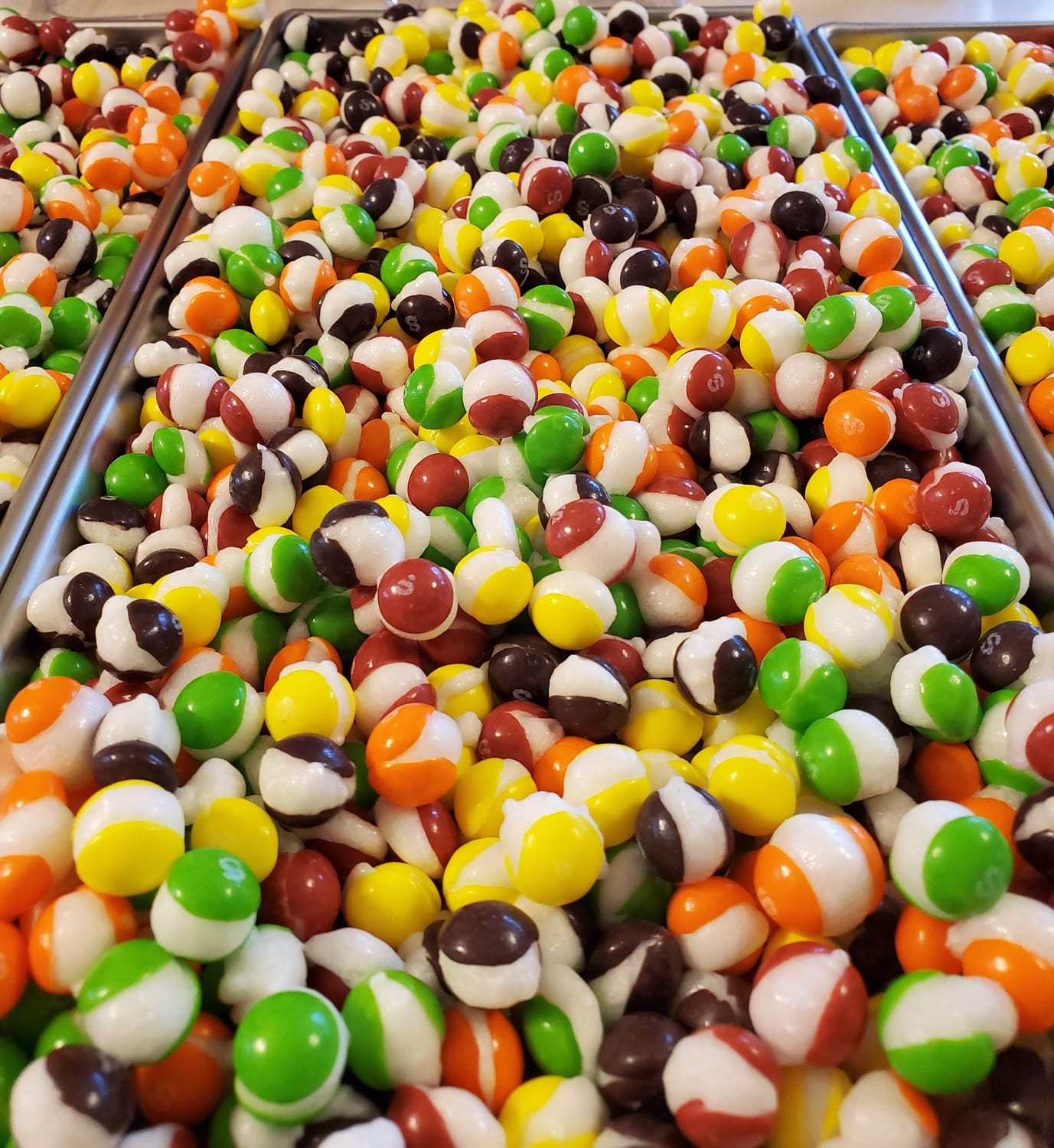
Skittles are one of the classic candies many people associate with freeze-drying, and they are a great place to begin. We have freeze-dried Original, Sour, and Wild Berry Skittles, and each variety reacts a little differently.
In the end, they all puff nicely and develop the light, crunchy texture people expect from freeze-dried candy.
You may just need to get used
to how they do for you, in your machine and in your environment.
Many people use their machine’s candy mode, but we still use our old-school method. We skip the freeze cycle and go directly into the dry cycle. For Skittles, we do not preheat the machine. We place them on the trays and let them run for approximately six hours.
They can sometimes be finished faster by preheating the machine, turning on the vacuum to help them puff, and then continuing to dry them until they are firm enough to hold their shape.
My personal favorite is Wild Berry. I simply prefer the berry flavors, and they are always a fun batch to make.
2. Jolly Ranchers
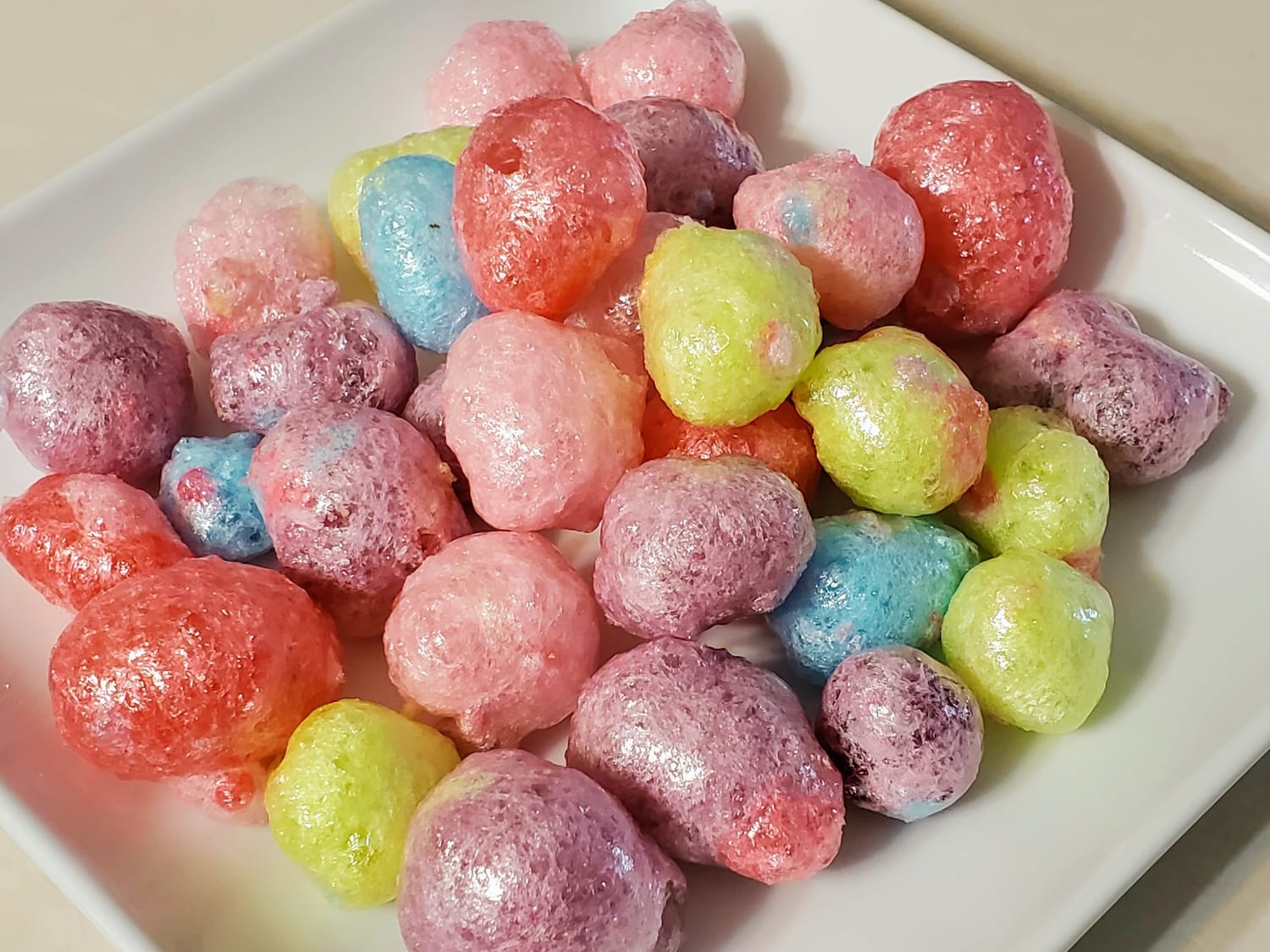
Jolly Ranchers create one of the most dramatic transformations on this list. We cut them into halves or thirds using a specific cutting tool before placing them in the freeze-dryer. I will include the tool link here because it makes the preparation much easier. We do not preheat the machine for Jolly Ranchers.
Once they begin to expand, they
puff significantly and become light, airy, and crispy. When everything goes well, they should come out fairly round.
Piece size matters. If the pieces are too large, they can puff high enough to hit the shelf above them. That creates a sticky mess to clean up and can flatten or ruin the rounded appearance of the finished candy.
Jolly Ranchers are also somewhat delicate after freeze-drying. I prefer packaging them in deli containers because the rigid container protects their shape, although Mylar bags can work when they are handled and stored carefully.
Heat is another concern. Freeze-dried Jolly Ranchers can become sticky in warmer conditions, so I recommend keeping them on the cooler side whenever possible.
One preparation trick has saved us a lot of time: leave the candies individually wrapped while cutting them. When we cut them in half using our tool, the wrappers slipped right off without leaving paper or plastic stuck to the candy.
Do not unwrap all of them first and pile the candies together, especially in warm conditions.
3. Gummy Worms
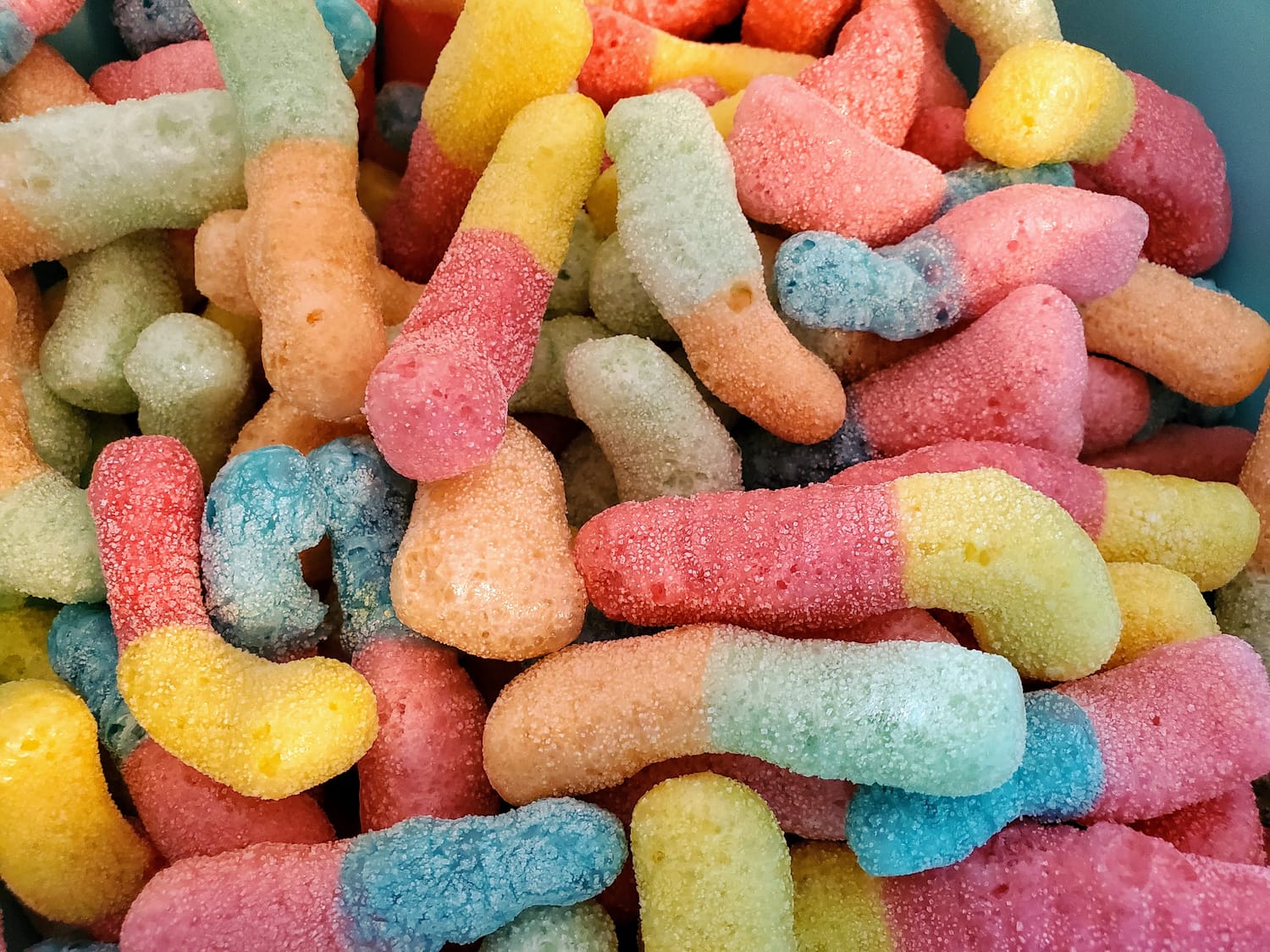
Gummy worms are one of the most entertaining candies to freeze-dry, especially for kids.
We use the smaller Trolli gummy worms and leave them whole. There's a link of what we use in the Shop the Candies section below.
Our method is simple: no preheating, skip the freeze cycle, and go directly into the dry cycle
for approximately six hours.
When they cooperate, the worms at least double in size and develop a light, crunchy texture that reminds me of a crunchy cheese puff. The transformation is dramatic enough to be fun without requiring cutting or complicated preparation.
The biggest challenge is consistency. Different brands can behave very differently, but even separate bags or batches from the same brand may not produce identical results. Some worms barely puff, while others become much larger than expected.
It is difficult to know exactly why. Freshness, recipe changes, storage conditions, room temperature, humidity, or the machine’s behavior that day may all play a role. This is a good example of why freeze-drying candy sometimes requires experimentation, even when you are using a product that has worked before.
Despite the occasional unpredictable batch, gummy worms are still worth trying. They are colorful, fun, and especially popular with children.
4. Peach Rings
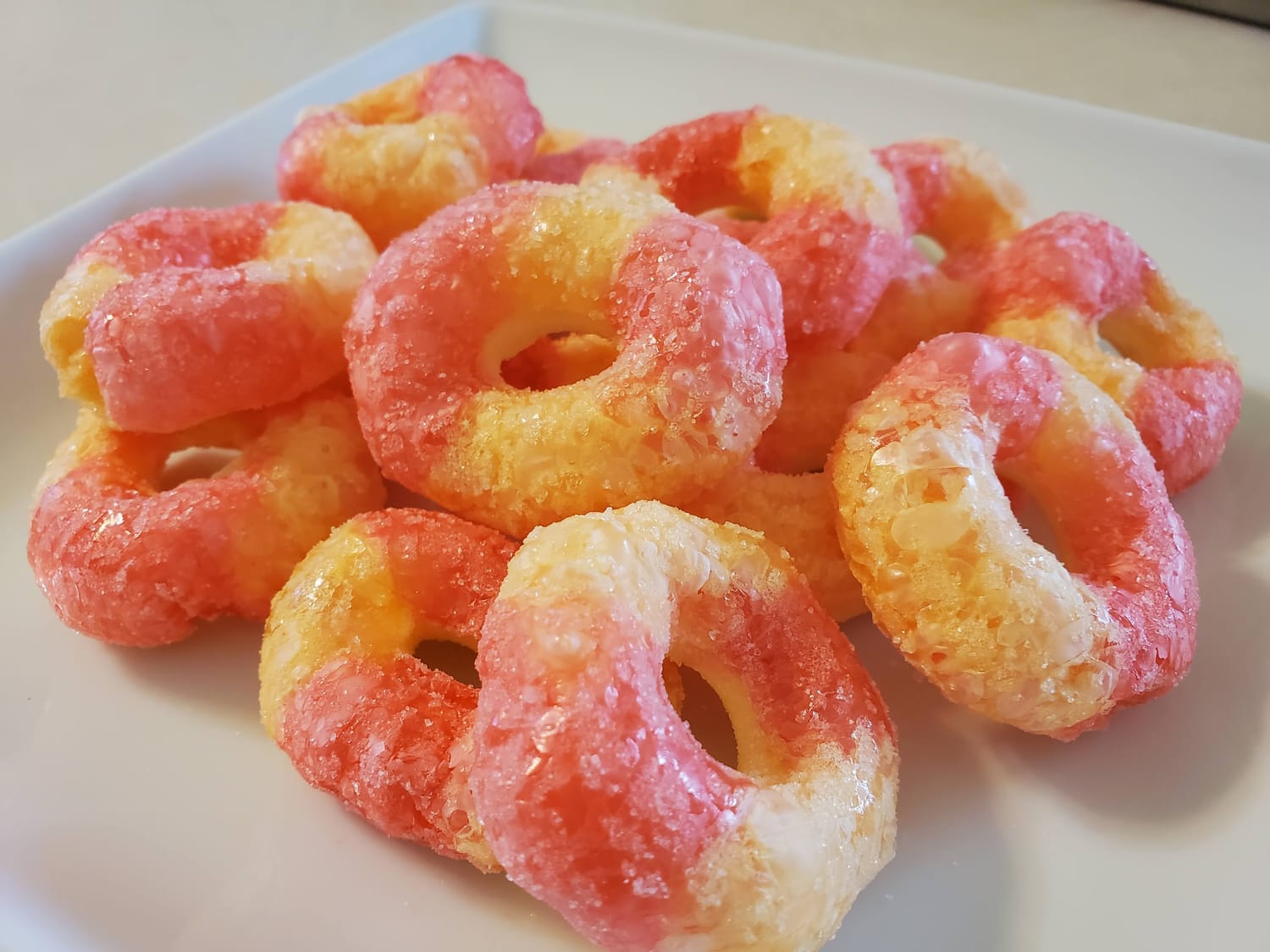
Peach rings are another classic candy that can create a big, eye-catching transformation. We use the bulk bags of Trolli peach rings and place them on the trays whole.
We skip the freeze cycle, just as we do with many other candies. Preheating can help peach rings puff more, although it is not always necessary. When they respond well,
they should approximately double in size.
Peach rings can be inconsistent. Some batches become light and crunchy, while others retain more chewiness than expected. Even when they come out on the crunchier side, my customers still love them.
Personally, I enjoy peach rings both ways. The softer version keeps some of the familiar gummy texture, while the fully puffed version offers the dramatic crunch people expect from freeze-dried candy.
Either way, they remain a customer favorite.
5. Nerds Gummy Clusters
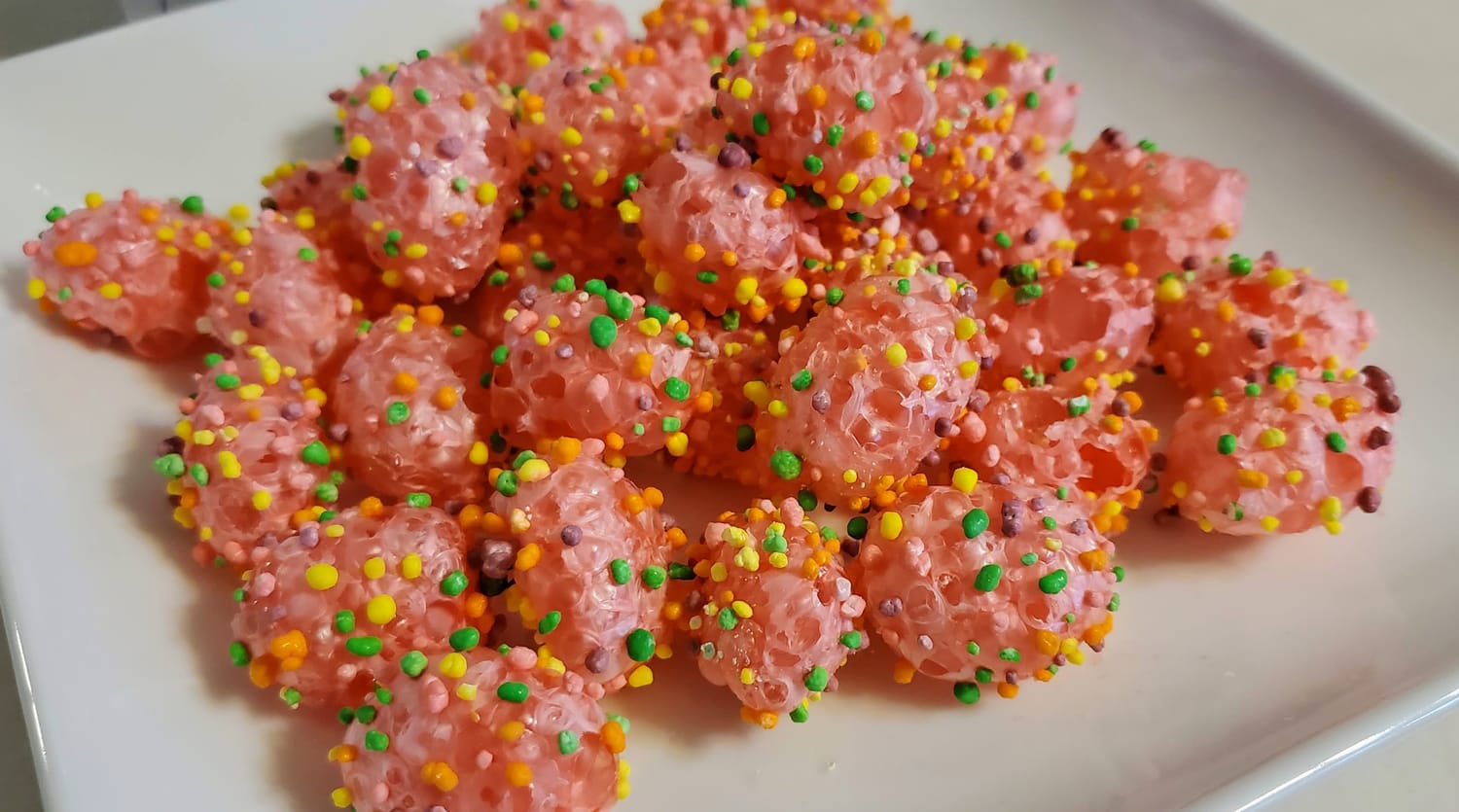
Nerds Gummy Clusters are one of the most dramatic—and most popular—candies on this list. We place them on the trays whole and skip the freeze cycle.
They can expand to roughly three times their original size.
As they puff, some of the individual Nerds may fall away from the outside, but the gummy center transforms into a light, crispy texture.
In my experience, they are also one of the more reliable candies to freeze-dry. I have had very few problems with them failing to puff properly.
The main concern comes after the cycle is finished. Freeze-dried Nerds Gummy Clusters are delicate and need to be handled carefully so they keep their shape and appearance. Rough movement or tight packaging can cause them to break apart.
Even with that extra care, they are absolutely worth making. They are easily one of my top five freeze-dried candies and a major favorite with customers.
6. Milk Duds
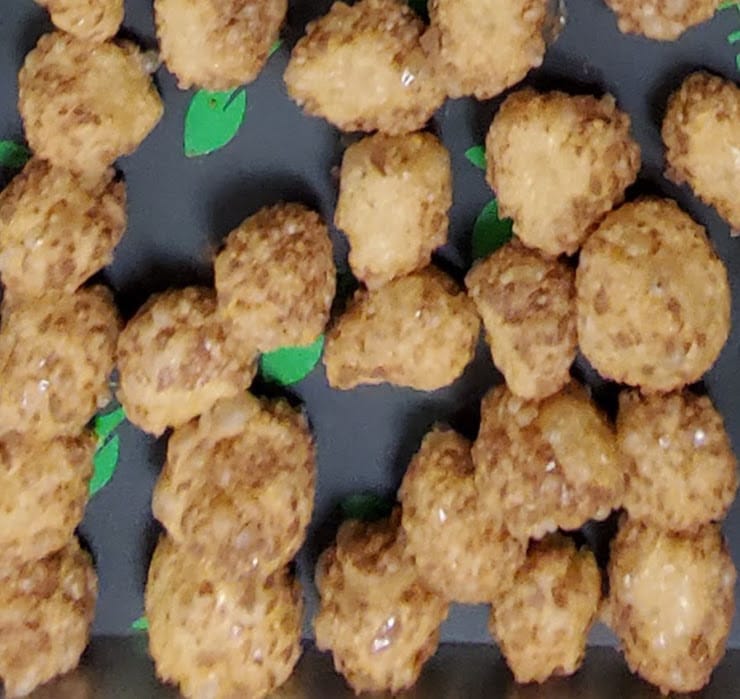
Milk Duds create one of the biggest transformations on this list. We cut them in half before freeze-drying, but they are much easier to cut when they are firm. If they feel too soft, I chill them first.
We skip the freeze cycle and go directly into drying. Once they begin expanding, the caramel can puff to roughly four times its original size.
The chocolate coating melts during the process and spreads across the surface in little speckles.
The finished pieces are not perfectly polished-looking—and honestly, I think they resemble tiny chicken nuggets. 😂 They may be a little goofy, but they taste amazing.
Fresh from the machine, Milk Duds can be messy and delicate. Letting them cool for about 30 minutes before handling or packaging helps the chocolate firm back up and reduces the mess.
They also need to be kept away from heat. Warm conditions can soften the chocolate and make the finished candy sticky or fragile.
Milk Duds easily rank in my personal top ten. The flavor is excellent, the transformation is fun, and they are absolutely worth trying.
7. Lemonheads
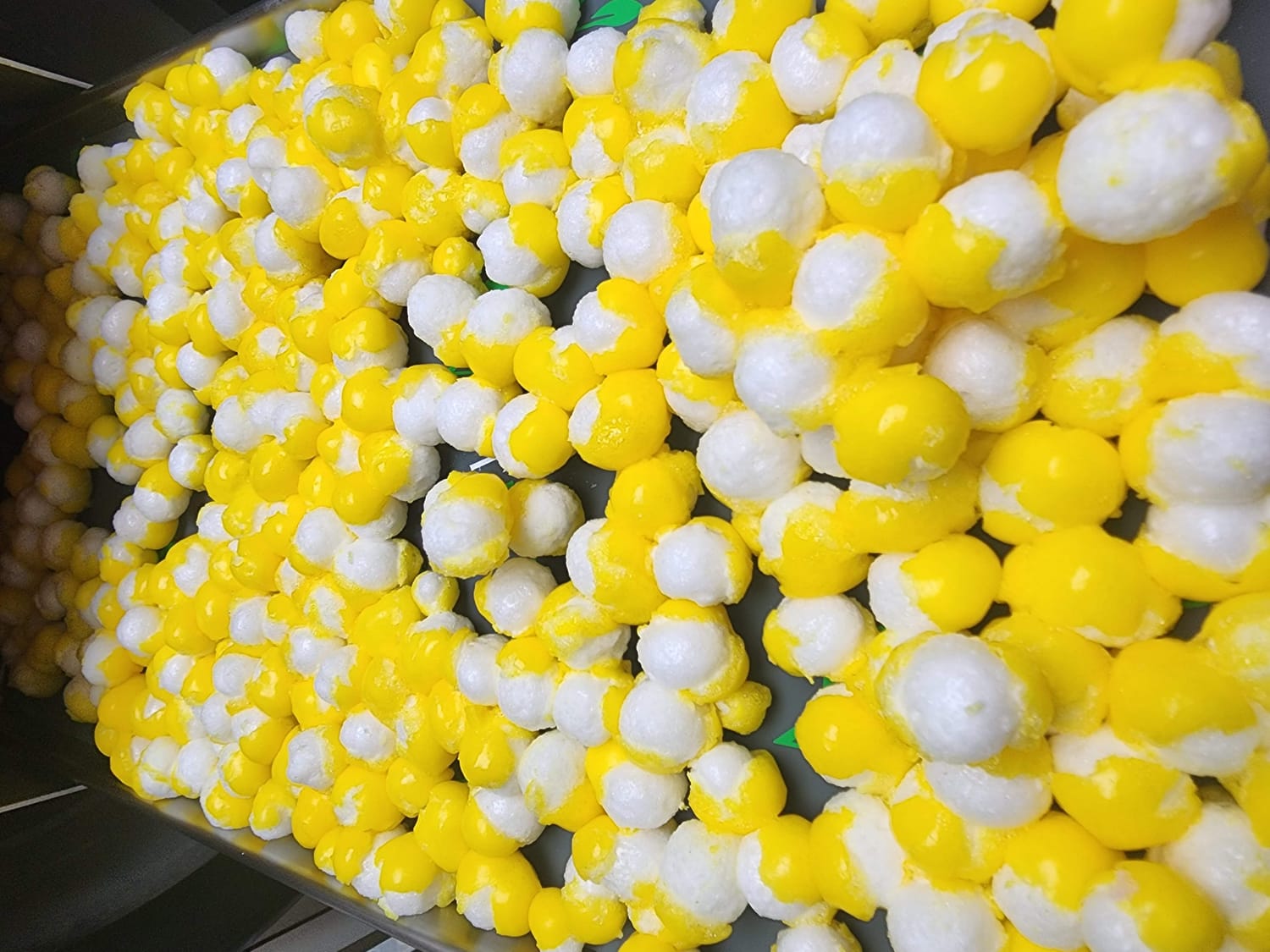
Lemonheads require a little more technique than some of the easier candies on this list. We place them on the trays whole, but unlike Skittles or gummy worms, they need to be warmed first.
We use Functional Mode to heat them for approximately 15 to 20 minutes.
Once they have softened, we use the vacuum in Functional Mode to puff them quickly to the size we want.
We then skip the freeze cycle and dry them for approximately six hours.
A similar result can also be achieved using Candy Mode, depending on the machine and software version.
The amount they expand can vary. If they are not softened enough before the vacuum is applied, they may not puff properly at all. Some batches also seem to cooperate better than others.
The goal is to see the Lemonheads crack open and reveal their white centers. The more cracked-open centers you see, the better the batch usually looks.
They can be inconsistent at first, but once you learn your machine and refine your technique, the process becomes much easier to repeat successfully.
Lemonheads are fun, crunchy, and sour, although I would personally rank Sour Skittles ahead of them.
8. Mini Starbursts
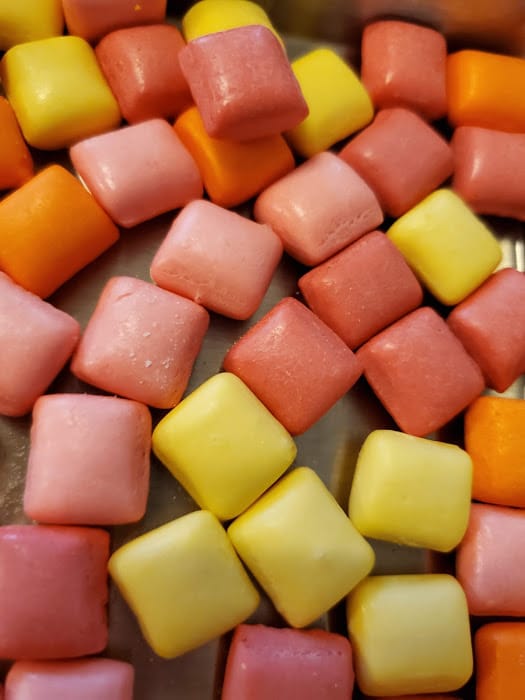
Mini Starbursts are small, reliable, and incredibly easy to snack on. We freeze-dry them whole and skip the freeze cycle.
They usually expand to somewhere between one-third larger and nearly double their original size. If you want a more dramatic puff, preheating can help.
The finished texture is extra crunchy, and because they stay small, they are especially fun to munch on by the handful. They are also one of the more dependable candies on this list, which makes them a good option for beginners.
I love them - and yes, I clearly have a lot of favorites.
Mini Starbursts would probably land somewhere in my personal top eight.
9. Bit-O-Honey
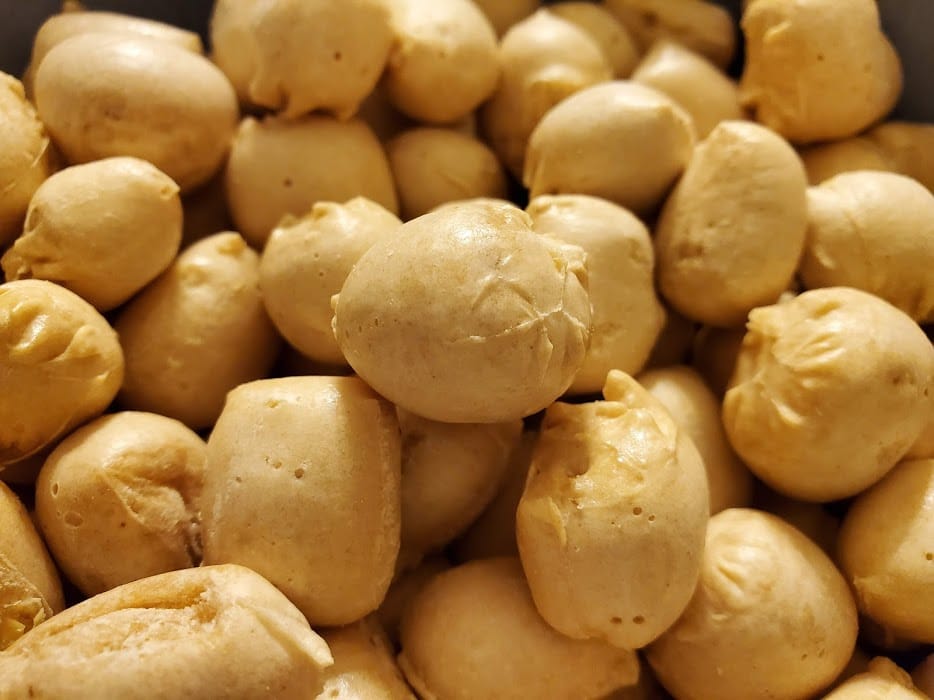
Bit-O-Honey is one of the most reliable candies on this list - and one of my absolute favorites.
The preparation depends on the size, but for the traditional small individually wrapped pieces, we unwrap them and cut each one in half. There is no need to chill them first.
We skip the freeze cycle and go directly into drying. During the process, the pieces roughly double in size and become more rounded.
The finished texture is airy, crispy, and crunchy, with a little more crunch than some of the lighter puffed candies. They are also easier to handle than many other freeze-dried candies because they are not especially messy or overly delicate.
I have found Bit-O-Honey to be very consistent from batch to batch, which makes it a great choice for beginners.
They are easily in my personal top five. I love them—and fair warning, they are completely addictive.
10. Airheads
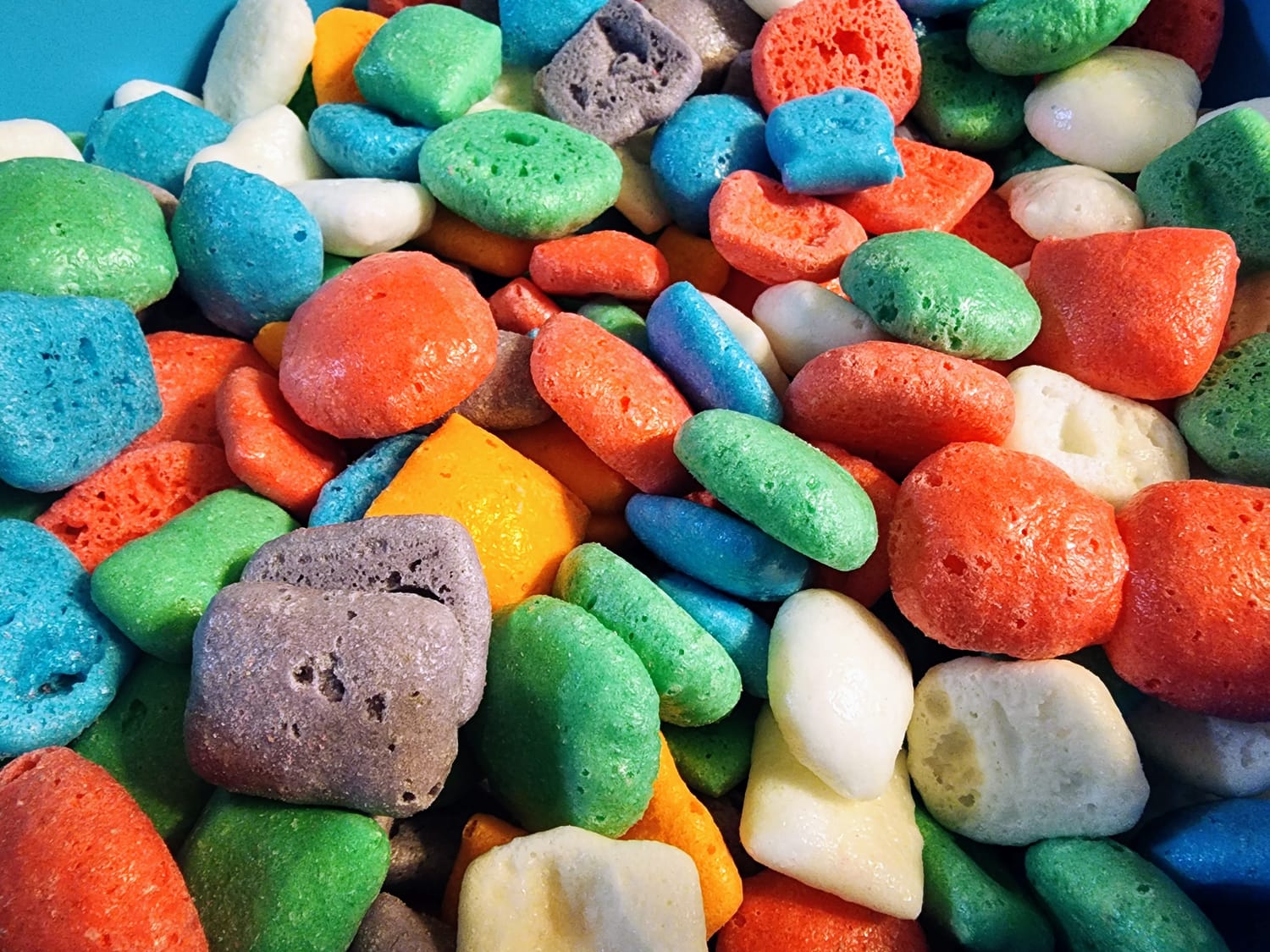
Airheads take a little preparation, but they create a fun and dramatic result.
For the standard five-inch bars, we cut each one into approximately six pieces. For the smaller individually wrapped pieces often found in Halloween candy assortments, we usually cut them in half.
We skip the freeze cycle and go directly into drying. The pieces typically expand to two or three times their original size.
Once finished, they become crunchy with a light, airy center. Most batches puff consistently, although an occasional piece may expand unevenly.
Airheads are easy enough to prepare that I would place them in my top ten for convenience. Their intense flavors are fun, although they are not one of my personal top eating favorites simply because there are so many others I enjoy more.
Customers clearly disagree with me - they remain one of our top ten sellers.
A Note for Freeze-Dried Candy Sellers
This article uses brand names so readers can clearly identify the original candies being discussed. Selling a transformed candy product under another company’s brand name, logo, packaging style, or trademark may raise different legal and labeling considerations.
Do not assume that purchasing and freeze-drying a branded candy automatically gives you permission to market your finished product using that company’s name or branding. Consider using accurate, generic product descriptions and consult a qualified trademark or food-business attorney about your product names, labels, listings, and advertising.
This article is based on personal experience and is provided for general educational purposes only. It is not legal advice.
Which Classic Candy Have You Tried?
These ten candies helped make freeze-dried candy fun, recognizable, and impossible to ignore. Some are easy enough for a first batch, while others take a little practice, patience, and learning how your own machine responds.
You do not need to master every candy at once. Start with one or two reliable options, pay attention to how they puff and dry, and adjust from there. Once you understand how heat, vacuum, timing, and candy freshness affect your results, the more complicated candies become much less intimidating.
Now I want to know how your results compare.
How many of these ten classic candies have you freeze-dried? Which one turned out best - and which one gave you the biggest headache?
Share your experience in the comments, including any candy you think deserves a spot on the list.
SHARE



Get the Freeze-Dry Digest.
Weekly freeze-drying tips, tools, recipes, business ideas, new blog posts, and resources delivered straight to your inbox.