
Label It Before You Gift It: Holiday Freeze-Drying for Home, Gifts, and Sales
By Crystal Arnold
A holiday ribbon can make a bag of freeze-dried food look finished. Before that bag goes into the pantry, a gift basket, or a customer's hands, I'd give the label the same attention.
Will the next person know what's inside? What's in it? When was it packed? Can they eat it dry, or does it need preparation?
Those questions matter even when the next person is you, six months from now.
Start with the food you're keeping at home
You don't need a fancy label maker to start. A readable label and a consistent routine can do a lot. My recommendation is to label each package as you finish it, while the recipe and batch details are still in front of you.
For a useful home label, I'd include:
A specific food name. “Cinnamon apples” tells you more than “fruit.” Note raw or cooked status when that distinction matters.
The actual ingredients. Include the seasoning, coating, sauce, or other additions that someone could easily overlook.
A clearly named date. Write “Prepared on,” “Freeze-dried on,” or “Packed on,” whichever event you're recording. Include the year.
Storage and use notes. Explain how to store it and whether it's a dry snack or needs rehydrating or cooking.
An optional batch note. A simple code can connect the package to your recipe and processing notes.
University of Minnesota Extension recommends labeling home freeze-dried food with its identity, raw or cooked status, and preparation date. It also recommends cool, dry storage. Read its home freeze-drying guidance.
I would keep labels together with the bags, jars, and sealing supplies. That makes labeling part of putting food away instead of another job to remember later.
For holiday gifts, write for a first-time user
Your recipient may never have seen a freeze dryer. A pretty bag of dinner ingredients can leave them wondering whether to snack on it, add water, or put it on the stove.
I would label every inner package, even if several bags share one gift basket. The basket and gift tag may disappear long before the last snack does.
For meals, add a small instruction card with the portion size and recipe-specific water, resting, and heating directions you've checked for that food. Explain what to do after opening or rehydrating. Avoid giving every meal the same “just add water” directions.
Only tell someone to add hot water directly to a pouch if the packaging is rated for that use. Otherwise, give directions for an appropriate bowl or pot. Harvest Right's packaging and shipping guide has a helpful section on labels and preparation instructions for recipients.
For gifts, I'd lean toward familiar foods with straightforward instructions. The goal is for the recipient to enjoy the food without needing a lesson at the kitchen counter.
Don't leave ingredients and allergens to guesswork
A name like “holiday crunch” may sound fun, but it doesn't tell someone whether the mix includes milk, peanuts, or wheat.
Keep the original ingredient information from anything you use, including candy, yogurt, seasonings, and mixes. Check the actual packages for the batch you're making rather than relying on memory or last year's label.
The nine major allergens recognized by U.S. law are milk, eggs, fish, crustacean shellfish, tree nuts, peanuts, wheat, soybeans, and sesame. People can also be allergic to foods outside that list, so an allergen callout is no substitute for a complete ingredient list. The FDA explains ingredient and allergen labeling here.
For a gift, I'd also ask the recipient about allergies before choosing the food. Be honest about shared equipment and what you can verify. Avoid blanket “allergen-free” promises. For sellers, advisory wording such as “may contain” must be truthful and cannot replace precautions against cross-contact.
Let the date tell the truth
“Packed on October 19, 2026” records an event. It doesn't prove that a food will remain safe for a particular number of years.
I wouldn't add an automatic 25-year shelf-life claim to homemade gifts. University of Minnesota Extension notes that information on the shelf life of home freeze-dried foods is limited. The food, preparation, dryness, packaging, and storage all deserve attention.
A label also can't make up for unsafe handling or a poor seal. Freeze-drying does not kill illness-causing microorganisms. Foods that need cooking still need appropriate cooking, and rehydrated food needs safe handling.
If you use a quality or use-by date, make sure it has a defensible basis for that particular product. Don't invent one just because a blank on a template asks for it.
If you sell, add a separate compliance check
The home and gift suggestions above are practical habits. Selling adds requirements that depend on your food, location, and how you sell it.
Before printing a holiday run of labels, check with the agency that regulates your business. Confirm that the specific food and production process are allowed, then ask what the label must contain. A market's approval or another seller's label isn't enough to answer that.
Useful questions to bring to your regulator include:
What product name, net quantity, and business identification are required?
How must ingredients, sub-ingredients, and allergens be declared?
Does a cottage-food statement or other wording apply?
Are Nutrition Facts required, or does a specific exemption apply?
Do my sales method or shipping destinations change the requirements?
The FDA's food-business starting guide explains why federal, state, and local requirements all matter. Use it as a starting point, then verify your own situation before selling. This article is general guidance, not a legal label review.
Make one sample before printing the whole stack
Put a sample label on the actual bag or jar. Read it at normal size. Is the print clear? Does a ribbon cover the ingredients? Will the label stay with the food after the gift tag is removed?
Then do one final pass:
The label matches the food in this package.
The ingredients match the recipe and source packages.
The date says what it means.
The storage and preparation directions fit this food.
Any seller-specific requirements have been checked.
A holiday label can still be cheerful and personal. I would just make sure the useful information earns its place before the bows and decorations do.
Whether you're filling your own shelves, sharing something homemade, or preparing customer orders, a clear label is a small finishing step worth making a habit.
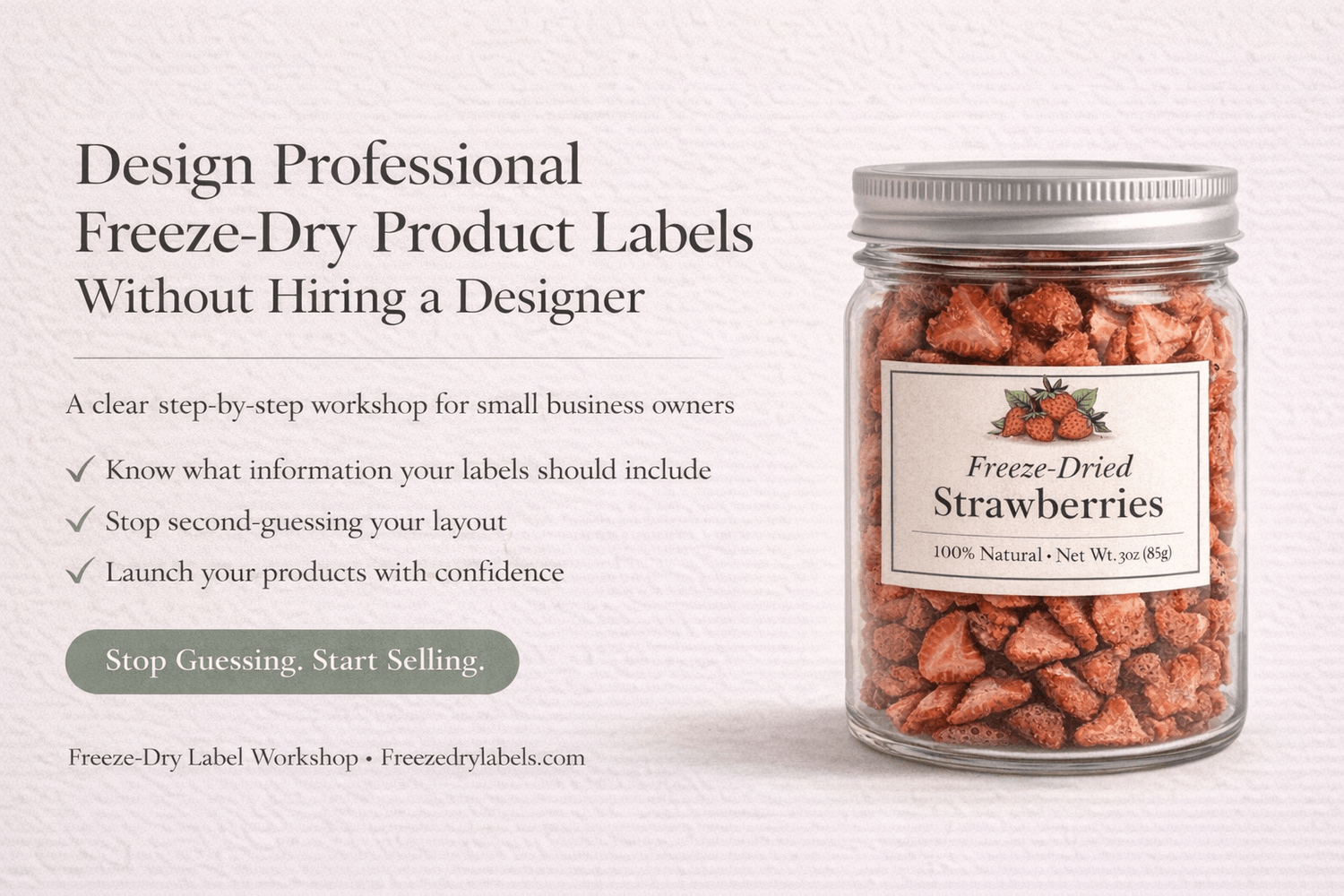
Learn How To Design & Print Labels at Home
SHARE



Get the Freeze-Dry Digest.
Weekly freeze-drying tips, tools, recipes, business ideas, new blog posts, and resources delivered straight to your inbox.