
How Much Does It REALLY Cost to Freeze-Dry Food? (The Expenses Most People Forget)
One of the most common questions I hear is:
"How much does it cost to freeze-dry food?"
Most people asking this question are focused on the cost of the freeze dryer itself.
While the machine is certainly the largest expense, it is rarely the only expense.
In my experience, many new freeze-dryer owners underestimate the total investment required to get fully set up and operating efficiently.
If your goal is simply to preserve food for your family, a realistic starting budget is often in the neighborhood of $4,000 to $5,000, depending on the freeze dryer you choose, accessories, supplies, taxes, shipping costs, and any setup requirements unique to your home.
For some households, electrical upgrades may also be necessary—particularly with larger machines—which can increase the total investment even further.
The good news?
Not every expense has to happen on day one.
Many freeze-dry owners start with the basics and gradually add equipment, storage solutions, packaging supplies, and productivity upgrades as they gain experience.
In this article, I'll walk you through the expenses many people forget to consider based on my own freeze-drying journey that began in 2020.
Whether you're considering your first freeze dryer or simply trying to understand what ownership really costs, this guide will help you plan ahead and avoid unexpected surprises.
What Are Your Goals?
Before discussing dollars and cents, it's important to ask a simple question:
Why are you interested in freeze-drying?
Some common reasons include:
Emergency food storage
Preserving garden harvests
Reducing food waste
Creating healthier snacks
Lightweight camping meals
Long-term food preservation
Greater control over ingredients
Your answer matters because it directly impacts the equipment, supplies, and overall investment required.
Someone preserving food for a family of four may have very different needs than someone preparing large quantities for extended storage.
Start by identifying your goals first. The right setup for one person may be completely wrong for another.
The Freeze Dryer Itself
The freeze dryer will likely be your largest single expense.
For transparency, my family chose a Harvest Right freeze dryer because it was the option that best fit our needs at the time. I am not affiliated with Harvest Right and am not endorsing one brand over another. It is simply the machine I have personal experience using.
We started with a Medium Harvest Right freeze dryer, which worked very well for family food preservation.
When purchasing a freeze dryer, remember to budget for:
The machine itself
Vacuum pump
Shipping costs
Sales tax
Initial supplies
We chose the standard oil pump rather than an oil-free pump. Later, when we expanded into business use, we purchased a backup pump because downtime was not an option.
For family use, however, the original setup served us well.
The important lesson is this:
The freeze dryer is only the beginning.
The Setup Costs Most People Forget
This is where many new owners are caught off guard.
I expected to pay for the machine.
I did not expect all of the supporting purchases that would make freeze-drying easier, faster, and more efficient.
Extra Trays and Pans
One of our first upgrades was purchasing additional trays.
Having extra trays allows you to prepare future batches while another batch is still running. This simple upgrade can significantly improve productivity.
Additional Freezer Space
This was one of the biggest surprises for us.
As we became more experienced, we quickly realized the value of keeping food pre-frozen and ready to load.
Many freeze-dry owners eventually purchase a chest freezer or dedicate significant freezer space to support their workflow.
The small purchases add up quickly:
Cutting boards
Knives
Food choppers
Mixing bowls
Measuring tools
Funnels
Scoops
Storage containers
Individually, none of these purchases seem expensive.
Collectively, they can become a meaningful part of your setup cost.
Electrical Considerations
Every home is different.
In our case, we installed a whole-house surge protector to help protect our investment.
Depending on your home's electrical system and the size of your machine, you may need additional upgrades or professional guidance from an electrician.
This is especially important when considering larger freeze dryers.
Storage and Organization
As your inventory grows, so does the need for organization.
Shelving, storage bins, containers, and workspace improvements all become part of the overall investment.
Many people never budget for these expenses until they suddenly need them.
Beware of "Freeze-Dryer Creep"
No, that's not an official industry term.
It's what I call the gradual expansion that seems to happen to many freeze-dry owners.
It often starts innocently enough:
✔ Buy a freeze dryer
Then...
✔ Buy a few extra trays
✔ Add a chest freezer
✔ Purchase a better heat sealer
✔ Stock up on packaging supplies
✔ Add shelving and storage
✔ Improve your workspace
And before you know it, you're wondering whether a second freeze dryer would make life easier.
We started with a medium freeze dryer for family use.
As our experience grew, so did our setup.
The important takeaway is this:
Start with what you need today and allow your setup to evolve naturally.
Ongoing Costs After You're Set Up
Buying the equipment is only part of the story.
Every batch has ongoing costs.
Food Costs
This is usually the easiest cost to understand.
Whether you're purchasing strawberries, vegetables, meats, candy, or complete meals, your ingredient costs will vary from batch to batch.
Electricity
Freeze dryers often run for many hours at a time.
Your actual cost depends on:
Freeze dryer size
Cycle length
Local electricity rates
Ambient room temperature
While electricity may not be your largest expense, it should still be factored into your planning.
Even for personal use, packaging costs matter.
Examples include:
Mylar bags
Oxygen absorbers
Containers
Labels
Heat-sealing supplies
These costs can add up surprisingly quickly.
Maintenance
Equipment requires ongoing care.
Examples may include:
Vacuum pump oil
Filters
Replacement parts
General maintenance items
Ignoring maintenance costs can lead to inaccurate expectations about long-term ownership expenses.
Future Upgrades
Most freeze-dry owners continue refining their setup over time.
You may eventually decide to purchase:
Additional trays
Better storage solutions
More freezer space
Improved packaging equipment
These upgrades are optional but very common.
So What Does Freeze-Drying Really Cost?
The answer depends on your goals.
For many families, a realistic starting investment is often around:
$4,000 to $5,000+
And that's before considering any significant electrical upgrades that may be required for certain machines or home setups.
The freeze dryer itself is usually the largest expense, but it is far from the only expense.
Your true investment may include:
Freeze dryer
Vacuum pump
Shipping and taxes
Extra trays
Freezer space
Electrical upgrades
Storage solutions
Packaging supplies
Maintenance costs
Understanding these costs ahead of time can help you make informed decisions and avoid surprises.
What's Next?
Many people eventually begin asking a different question:
"Could I actually make money doing this?"
That's where things become much more complicated.
Once you move beyond freeze-drying for personal use and begin selling products, understanding your costs becomes critical.
Questions like:
How much does each package actually cost to produce?
Am I charging enough?
How do I account for packaging, labor, and electricity?
What profit margin should I aim for?
How do I create professional product labels?
What information needs to be included on my packaging?
These are the questions that separate hobbyists from business owners.
In the next article, we'll explore the true cost of producing freeze-dried products for sale and how to determine whether you're making money—or simply guessing.
You may also be interested in:
How To Make Your Own Product Labels For Your Freeze-Dry Business
Additional freeze-dry tools and resources available through Freeze-Dried Foodies
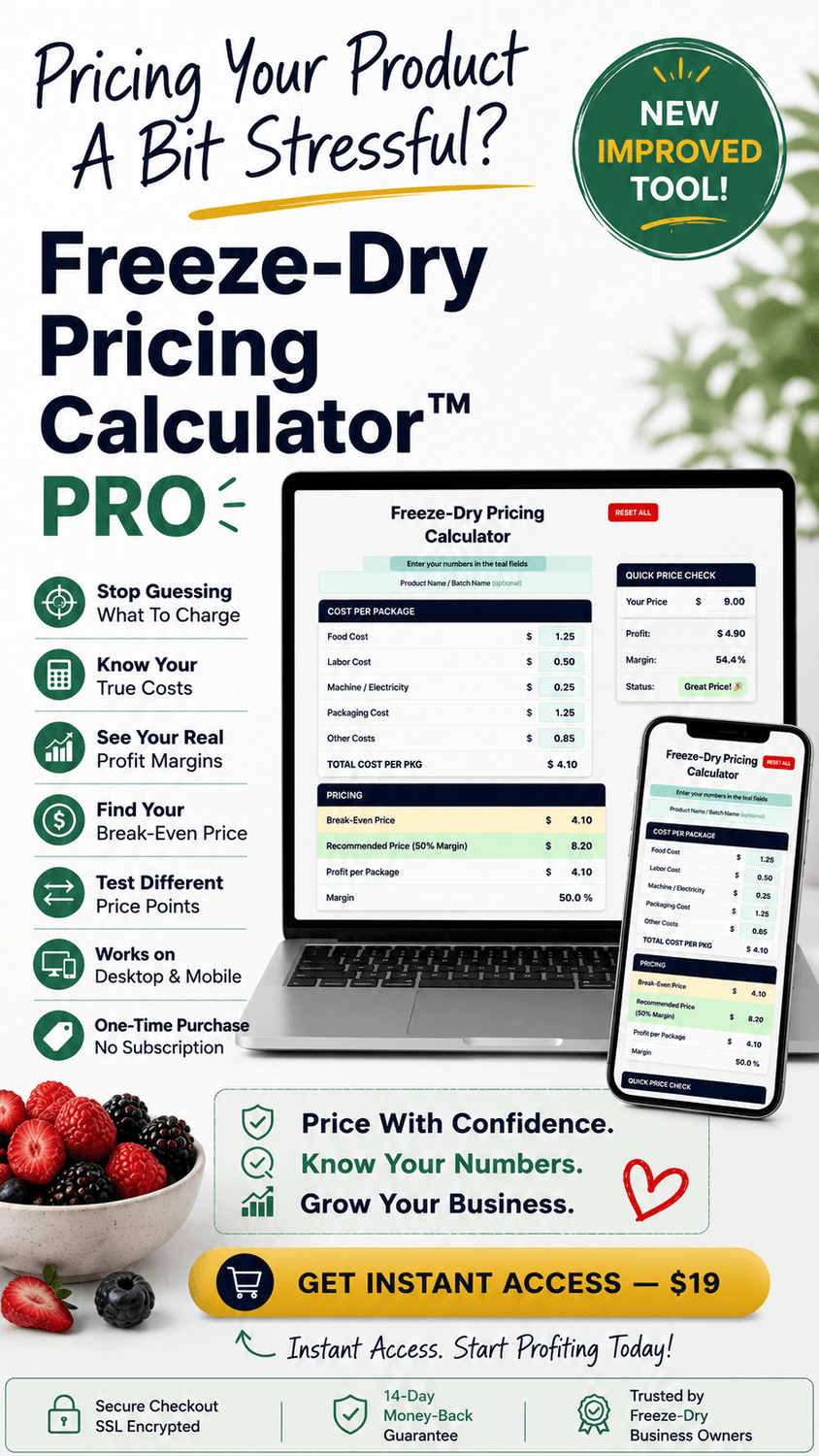
Want Help Pricing Your Products?
The Freeze-Dry Pricing Calculator™ PRO was designed to help freeze-dry sellers calculate:
✓ Actual cost per package
✓ Profit per package
✓ Profit margins
✓ Multiple pricing scenarios
✓ Recommended selling prices
If you're serious about understanding your numbers, it's one of the simplest ways to remove the guesswork from pricing.
SHARE



Get the Freeze-Dry Digest.
Weekly freeze-drying tips, tools, recipes, business ideas, new blog posts, and resources delivered straight to your inbox.