
FREE Guide to Safe Fruits & Vegetables for Dogs & Cats (Printable PDF)
A Guide to Safe Fruits & Vegetables for Dogs & Cats
Sharing healthy snacks with our pets can feel rewarding, especially when those puppy eyes or curious cat stares kick in. The good news? Many fruits and vegetables can be safe, refreshing treats for dogs and cats when served properly and in moderation.
The bad news is that not every “healthy” food for humans is safe for pets. Some fruits and vegetables can cause digestive upset, toxicity, or even serious health problems.
This quick guide will help you confidently choose safer options for your furry family members.
Why Fruits & Vegetables Should Only Be Treats
Dogs are omnivores, while cats are obligate carnivores. That means cats especially rely on animal-based nutrition for their primary diet. Fruits and vegetables should never replace balanced pet food.
Instead, think of them as:
Small healthy treats
Hydrating snacks
Low-calorie rewards
Occasional additions to meals
A good rule of thumb is to keep treats — including fruits and vegetables — under 10% of your pet’s daily diet.
Safe Fruits for Dogs & Cats
Many fruits contain vitamins, antioxidants, and moisture that pets may enjoy.
Some of the most commonly pet-safe fruits include:
Apples (remove seeds and core)
Bananas
Blueberries
Strawberries
Watermelon (seedless and rind removed)
Cantaloupe
Pears
Pineapple
Mango (pit removed)
Cranberries (unsweetened)
These fruits are best served fresh, washed well, and cut into small bite-sized pieces.
A Few Important Fruit Warnings
Even safe fruits often require preparation before serving.
Apples
Apple flesh is generally safe, but the seeds and core should always be removed.
Peaches & Cherries
The pits can contain cyanide compounds and also pose a choking hazard.
Watermelon
Remove both the seeds and rind to help prevent digestive upset or blockages.
Citrus Fruits
Small amounts may be tolerated, but lemons, limes, and other citrus fruits can irritate sensitive stomachs.
Grapes & Raisins
These should always be avoided. Even small amounts can cause serious kidney problems in dogs.
Safe Vegetables for Dogs & Cats
Vegetables can provide fiber, hydration, and low-calorie crunch for many pets.
Some pet-friendly vegetables include:
Carrots
Green Beans
Pumpkin
Sweet Potatoes
Zucchini
Peas
Cucumbers
Bell Peppers
Celery
Spinach (small amounts only)
Cooked vegetables are often easier for pets to digest, especially for cats.
Vegetable Safety Tips
Pumpkin
Plain cooked pumpkin can help support digestion. Avoid pumpkin pie filling with added sugar and spices.
Spinach
Small amounts are generally fine, but too much may contribute to kidney or bladder concerns in some pets.
Raw Potatoes
Avoid raw potatoes due to naturally occurring compounds that may be toxic.
Onions, Garlic & Chives
These are toxic to both dogs and cats and should never be fed.
Mushrooms
Store-bought mushrooms may be less risky, but wild mushrooms can be highly dangerous. It’s safest to avoid them altogether.
Tips for Safely Introducing New Foods
Whenever trying a new fruit or vegetable:
Start with tiny portions
Introduce one new food at a time
Watch for vomiting, diarrhea, itching, or stomach upset
Cut food into small pieces to reduce choking risk
Avoid added salt, sugar, butter, oils, or seasonings
Every pet is different, and some may have allergies or sensitivities.
Free Downloadable Guide
Want an easy printable version to keep on your fridge, save on your phone, or share with friends?
Download our FREE printable guide:
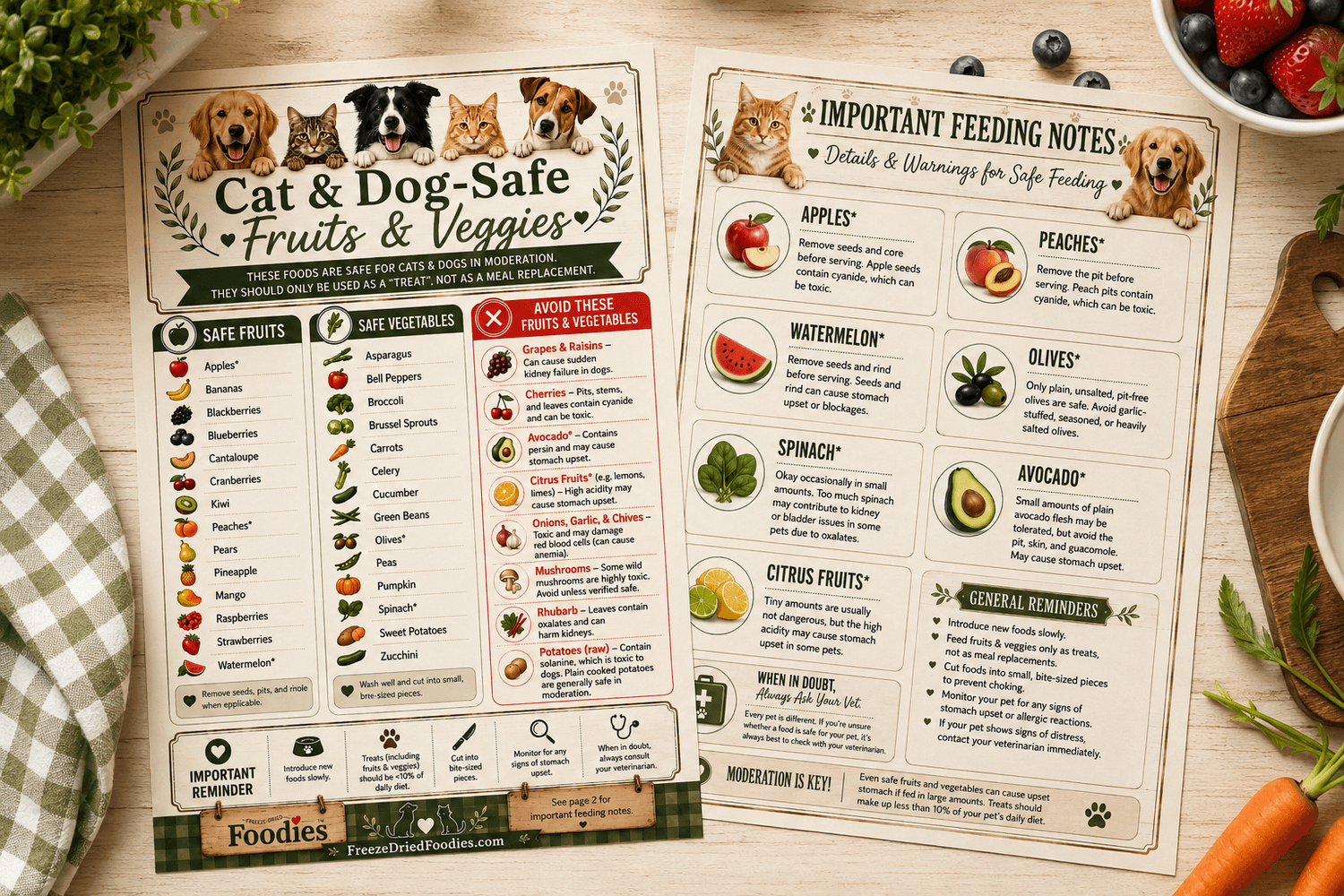
Cat & Dog-Safe Fruits & Veggies Reference Guide
It includes:
Safe fruits list
Safe vegetable list
Foods to avoid
Quick feeding reminders
Printable reference pages
When in doubt, always check with your veterinarian before introducing new foods into your pet’s diet.
Your pets depend on you to make safe choices — and a little knowledge goes a long way toward keeping tails wagging and whiskers happy.
SHARE



Get the Freeze-Dry Digest.
Weekly freeze-drying tips, tools, recipes, business ideas, new blog posts, and resources delivered straight to your inbox.